
Interviews and team input to understand needs and barriers.
A Complete Journey
to Better Teamwork
A simple 4-step process that identifies team needs, gets everyone involved, builds key skills, and shows what’s improving.
A Complete Journey
to Better Teamwork
A simple 4-step process that identifies team needs, gets everyone involved, builds key skills, and shows what’s improving.
A Complete Journey to Better Teamwork
A simple 4-step process that identifies team needs, gets everyone involved, builds key skills, and shows what’s improving.


Team Diagnostics

Team Role Assessment

Engagement in Development

Fast Skill Improvement

Results Evaluation
A Team is like a puzzle- every piece matters
You can have a talented team and still struggle. Because even small misalignments — in roles, communication, or trust — can slow things down or break things down.
This model shows the key elements that drive real team performance.
Behavency helps make sure those pieces actually work together — before a small crack becomes a costly problem.

Early Signs of Serious Team Problems
Duplicate tasks, poor communication, and lack of feedback aren’t just small issues — they grow into major barriers to reaching goals. Here are 4 common team challenges we often see and help solve
Missed Deadlines
When there’s no shared understanding of goals, roles, and responsibilities
Team Burnout
Duplicate tasks and misaligned priorities drain team energy and motivation
Resistance to Change
Fear and uncertainty take over if psychological safety and feedback culture are lacking
Siloed Teams
When there’s no habit of collaboration or shared ownership
A Team is like a puzzle- every piece matters
You can have a talented team and still struggle. Even small misalignments — in roles, communication, or trust — can slow things down or break them entirely.
This model shows the key elements behind real team performance.
Behavency helps those pieces work together — before a small issue becomes a costly problem.
Early Signs of Serious Team Problems
Small gaps in communication or clarity often grow into major obstacles.
Missed Deadlines
Unclear goals and roles slow the team down.
Burnout
Misaligned priorities and duplicated work drain motivation.
Resistance to Change
Low psychological safety makes change feel risky.
Siloed Teams
Poor collaboration creates disconnect and lost ownership.
Early Signs of Serious Team Problems
Small gaps in communication or clarity often grow into major obstacles.
Missed Deadlines
Unclear goals and roles slow the team down.
Burnout
Misaligned priorities and duplicated work drain motivation.
Resistance to Change
Low psychological safety makes change feel risky.
Siloed Teams
Poor collaboration creates disconnect and lost ownership.
Why Organizations Struggle to Fix Team Issues on Their Own
Focus on Content vs Behavior
Most programs deliver knowledge. But knowledge alone doesn’t change how teams work. Without new habits, even the best training sits on a shelf.
Missing steps in the process
Lasting change only happens when the full cycle is followed: Diagnosis → Engagement →Development → Evaluation. Skip a step, and the whole result suffers.
Fragmented approach
If diagnostics, training, and evaluation come from different sources, employees can struggle to see a clear sequence, how the parts connect, or what the overall goal is.
No clear personal relevance
If employees do not see how training connects to their daily work, they lose interest and are less likely to apply it.
Why Organizations Struggle to Fix Team Issues on Their Own
Focus on Content vs Behavior
Most programs deliver knowledge. But knowledge alone doesn’t change how teams work. Without new habits, even the best training sits on a shelf.
Missing steps in the process
Lasting change only happens when the full cycle is followed: Diagnosis → Engagement →Development → Evaluation. Skip a step, and the whole result suffers.
Fragmented approach
If diagnostics, training, and evaluation come from different providers, employees may not see how the parts fit together or what the overall goal is.
No clear personal relevance
If employees do not see how training connects to their daily work, they lose interest and are less likely to apply it.
Why Organizations Struggle to Fix Team Issues
on Their Own
Focus on Content, Not Behavior
Most programs deliver knowledge. But knowledge alone doesn’t change how teams work. Without new habits, even the best training sits on a shelf.
Missing Steps in the Process
Lasting change only happens when the full cycle is followed:
Diagnosis → Engagement →Development → Evaluation.
Skip a step, and the whole result suffers.
Fragmented Approach
If diagnostics, training, and evaluation come from different providers, employees may not see how the parts fit together or what the overall goal is.
Lack of clarity about personal benefit
If employees do not see how training connects to their daily work, they lose interest and are less likely to apply it.
Behavency supports teams throughout the entire journey — from insights to results.
Diagnostics
Identifying needs and barriers through interviews with stakeholders and the team.
Engagement
Building motivation for development through an interactive format.

Development
Training that develops the skills essential for a high-performing team.
Evaluation
Assessing program results based on behavioral changes and participant feedback.
Team Diagnostics
Team Role Assessment
Engagement in Development
Fast Skill Improvement
Results Evaluation
Behavency supports teams throughout the entire journey — from insights to results.
Diagnostics
Identifying needs and barriers through interviews with stakeholders and the team.

Engagement
Building motivation for development through an interactive format.

Development
Training that develops the skills essential for a high-performing team.
Evaluation
Assessing program results based on behavioral changes and participant feedback.
Behavency supports teams throughout the entire journey — from insights to results.
Diagnostics
Engagement
An interactive format that builds motivation for development.
Development
Focused training that builds essential team skills.
Evaluation
Feedback and behavioral indicators that show what changed.
36%
higher retention in companies investing in team development
30%
faster project delivery thanks to clear team coordination
43%
higher productivity in teams with strong employee engagement
23%
greater profit in companies with strong cross-team collaboration
25%
more innovation in teams with high psychological safety
You get both Asessment & Development under one roof
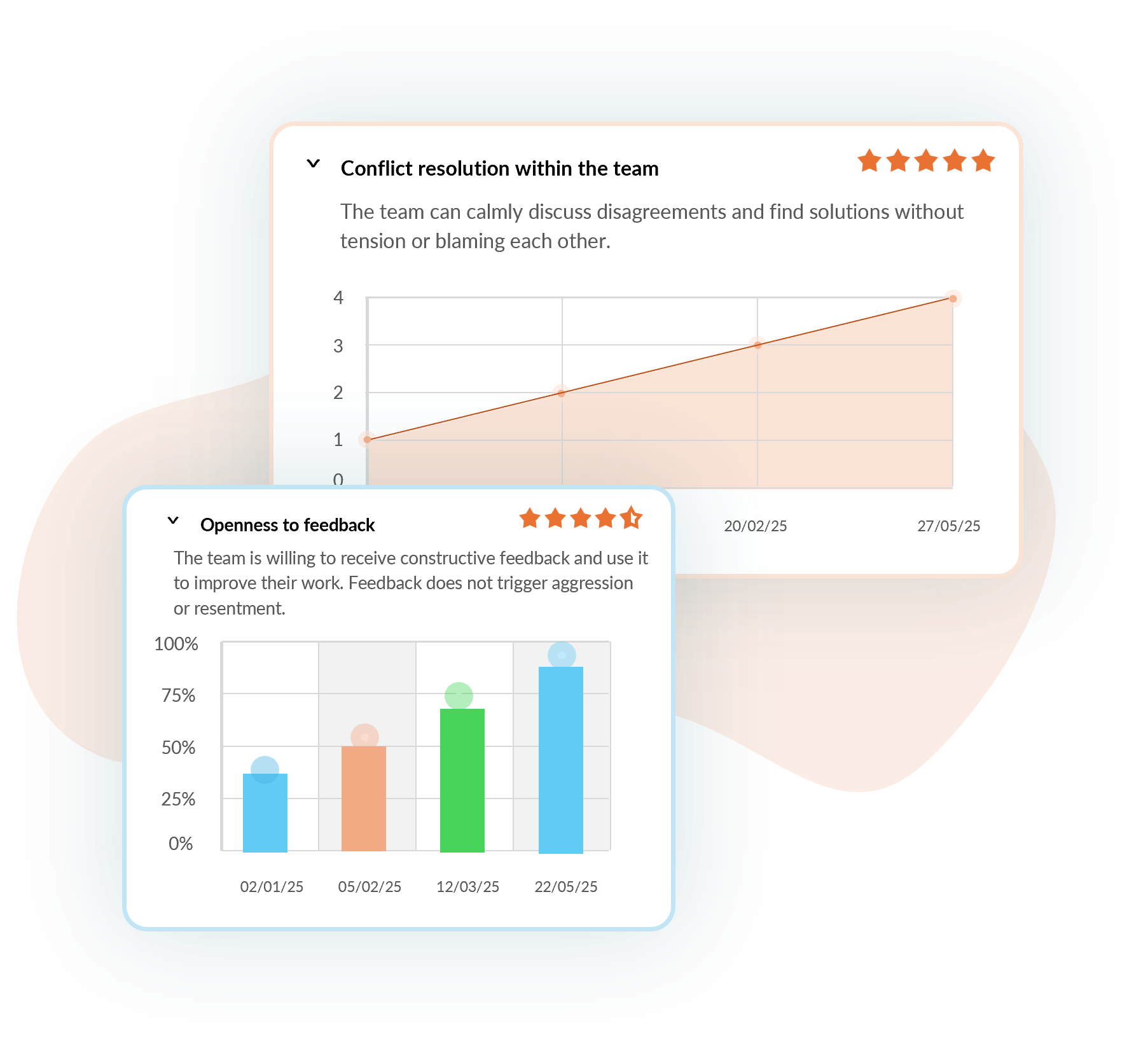
Understanding Team Needs
We begin with stakeholder interviews and a short team questionnaire to understand how the team works today and where support is needed most.
This helps identify the real priorities — so development focuses on what will make the biggest difference.
Team Role Assessment
Each participant completes a quick role assessment and gets a personal report showing where they bring the most value to the team — and where there’s room to grow.
When people understand their strengths, it becomes easier to assign roles, plan work together, and avoid duplication or unnecessary competition.


+36%
higher retention in companies investing in team development
+30%
faster project delivery thanks to clear team coordination
+43%
higher productivity in teams with strong employee engagement
+23%
greater profit in companies with strong cross-team collaboration
+25%
more innovation in teams with high psychological safety
Developing Key Skills
Participants take part in focused learning modules — online, in-person, or blended — designed to strengthen how teams communicate, solve problems, and work together.
The sessions combine guidance and practice, helping teams explore new ways of collaborating.
Training for Team Members
Our team training modules address the three core pillars of high performance: strengthening socio-emotional dynamics, improving operational efficiency, and mastering how to navigate internal and external change.
Each team member is offered up to five targeted modules designed to match their current needs and priorities.
Through these modules, your team builds shared competencies, aligns in approach, and develops the adaptability required to consistently perform at their best—together and over the long term.
Training for Managers
Manager training follows the same three-pillar framework—socio-emotional dynamics, operational efficiency, and change management—but with an enhanced focus on leadership impact.
Managers can choose from up to eight dedicated modules that address the unique challenges of leading teams, driving performance, and fostering a culture of adaptability.
This approach ensures leaders have the tools and insights to guide their teams toward sustained high performance.
Knowledge Application
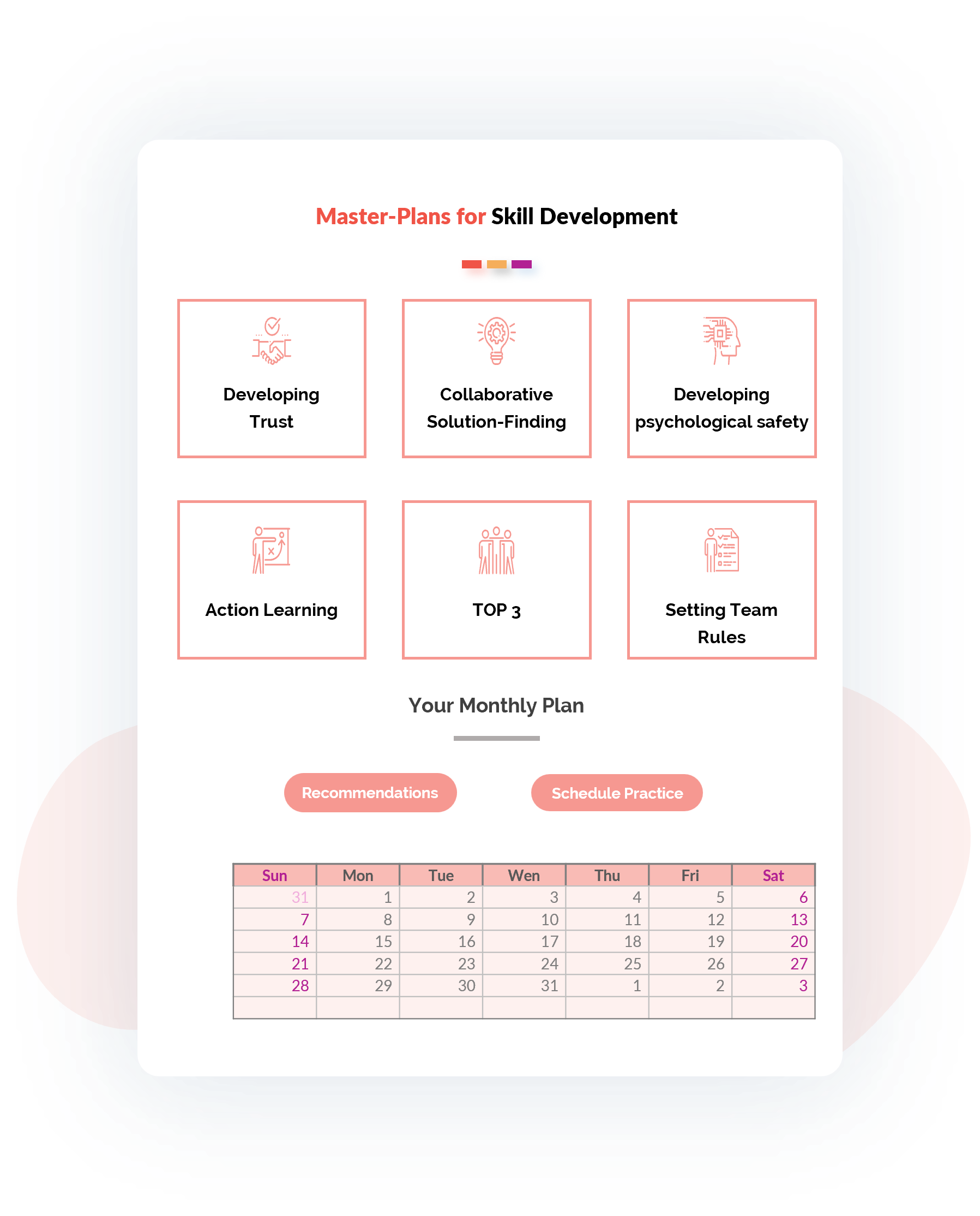
To help the learning turn into real action, each module is paired with Master Plans — practical frameworks and tools that guide individuals in applying the skills in daily work.
These resources make new behaviors easier to practice and help teams build consistent, long-lasting habits.


Step 4 — Reviewing Progress
We evaluate progress using a clear and structured model that looks at:
1. Awareness (before and after each sprint)
what participants understood before and after learning
2. Participant Reaction (After Each Sprint)
how valuable and relevant they found each module
3. On-the-Job Application (After Each Masterplan)
how much they applied the new behaviors in real work
4. Impact on the Team (At the End of the Program)
how teamwork changed, using 360° feedback where needed
Ready to dive deeper?
You get both asessment and development under one roof
Understanding Team Needs
Stakeholder interviews and a short team questionnaire show how the team works today and where support is needed.
This keeps development focused on what matters most for your people.
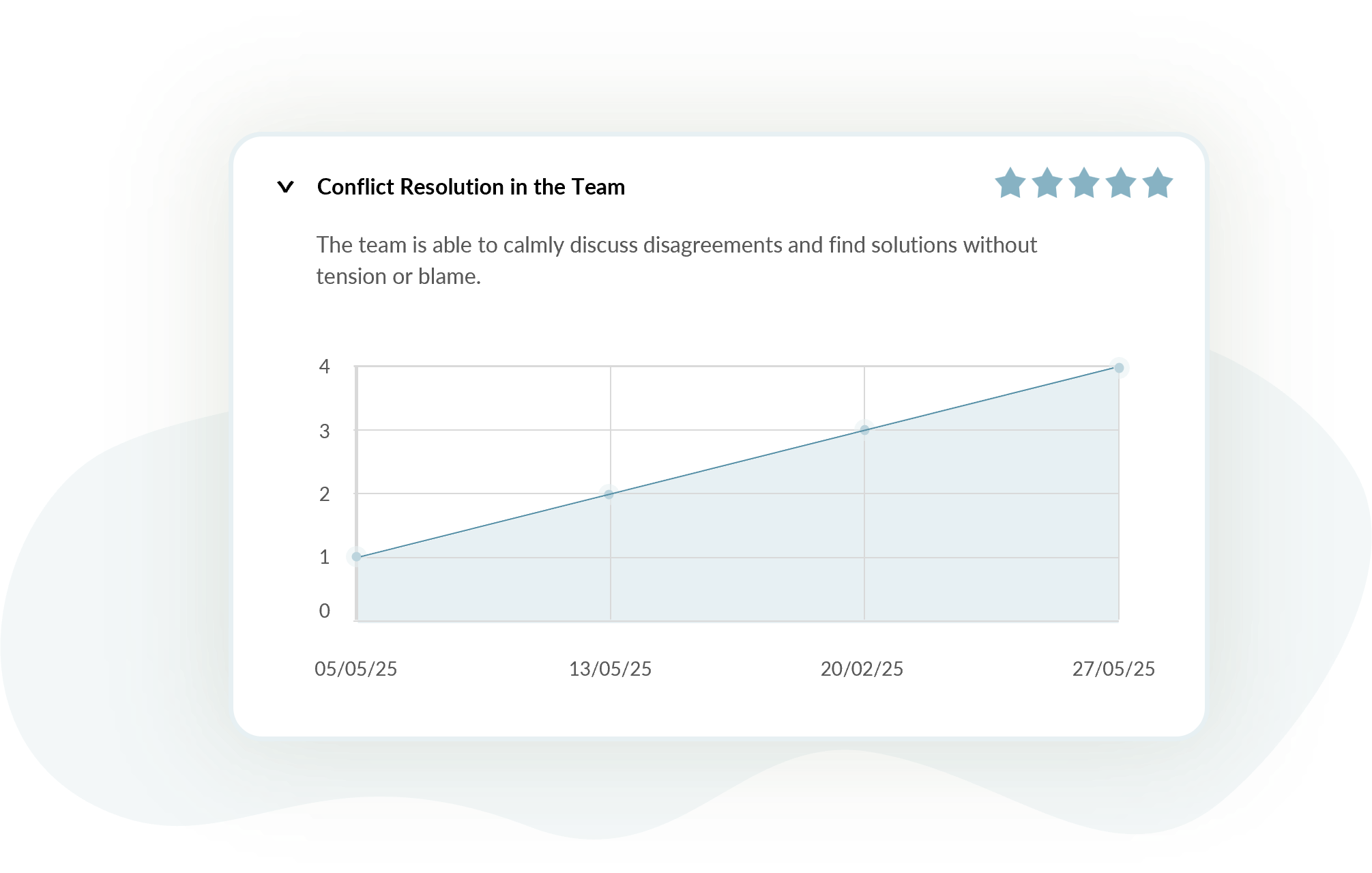
Team Role Assessment
A quick role assessment gives each person a clear view of their strengths and growth areas.
This makes role assignment and teamwork easier, fairer, and more coordinated.
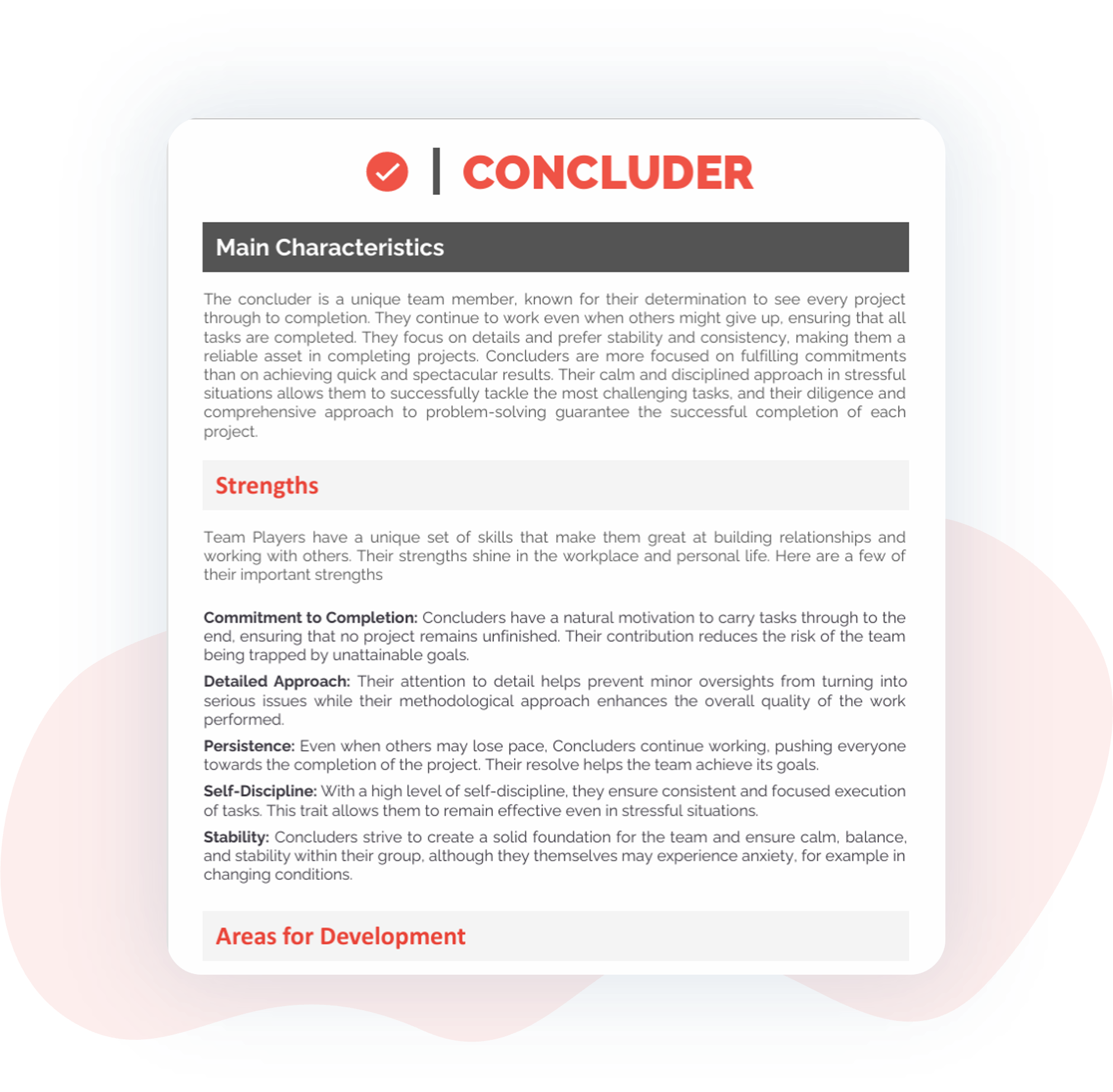
Building Engagement
Teams join an interactive gamified experience that reveals real collaboration patterns.
Seeing their own dynamics gives people practical insight — and makes them more open and ready for development.
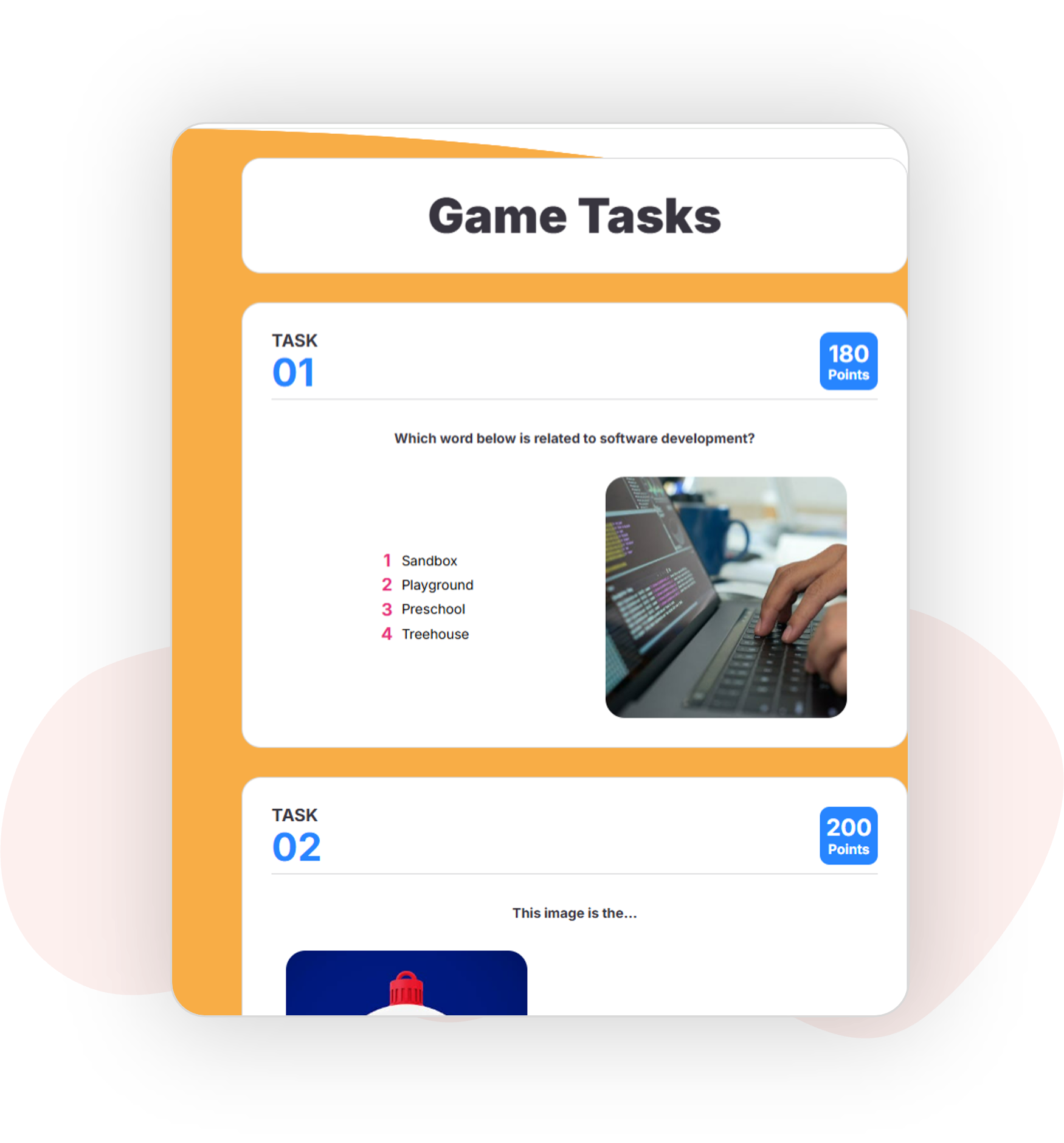
Team Analytical Report
Each team receives a report with:
- Key observations
- Behaviors shown in the session
- Recommendations for better collaboration
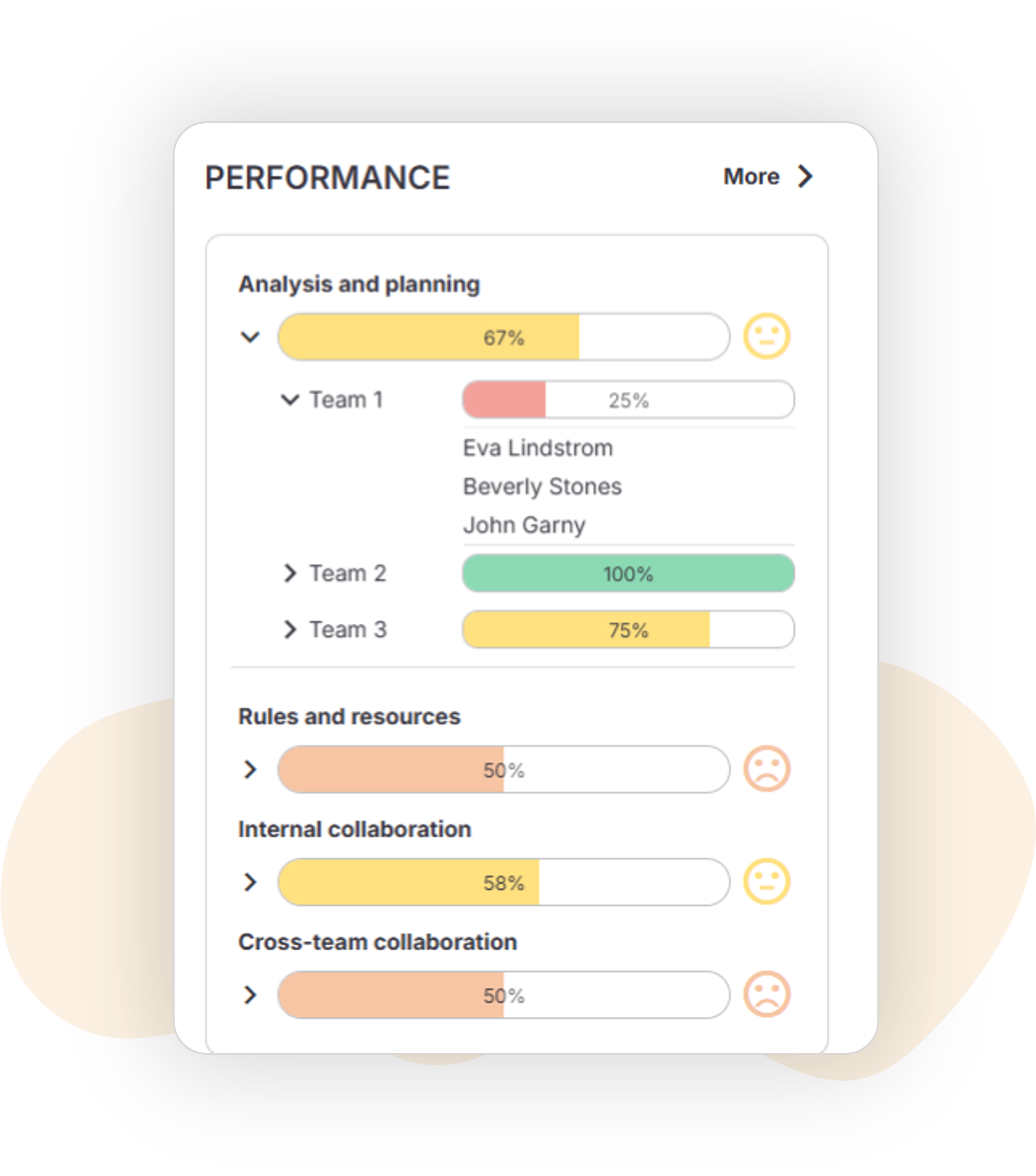
Knowledge Application
Master Plans give simple, practical tools for applying skills in daily work.
They help teams build consistent and lasting habits.
Reviewing Progress
Progress is reviewed using a structured model across four areas:
- Awareness – changes in understanding before and after learning
- Reaction – how relevant and valuable the learning felt
- Application – how consistently new behaviors were used at work
- Impact – observable changes in teamwork, supported by 360° feedback
You get both asessment and development under one roof
Understanding Team Needs
Stakeholder interviews and a short team questionnaire show how the team works today and where support is needed.
This keeps development focused on what matters most for your people.
Developing Key Skills
Focused online or in-person modules help teams strengthen how they communicate, plan, and solve problems together.
Sessions combine clear guidance with hands-on practice.
Training for Team Members
Our team training modules address the three core pillars of high performance: strengthening socio-emotional dynamics, improving operational efficiency, and mastering how to navigate internal and external change.
Each team member is offered up to five targeted modules designed to match their current needs and priorities.
Through these modules, your team builds shared competencies, aligns in approach, and develops the adaptability required to consistently perform at their best—together and over the long term.
Training for Managers
Manager training follows the same three-pillar framework—socio-emotional dynamics, operational efficiency, and change management—but with an enhanced focus on leadership impact.
Managers can choose from up to eight dedicated modules that address the unique challenges of leading teams, driving performance, and fostering a culture of adaptability.
This approach ensures leaders have the tools and insights to guide their teams toward sustained high performance.
Reviewing Progress
Progress is reviewed using a structured model across four areas:
1. Awareness changes in understanding before and after learning
2. Reaction how relevant and valuable the learning felt
3. Application how consistently new behaviors were used at work
4. Impact observable changes in teamwork, supported by 360° feedback
Training Formats
Every organization approaches learning differently — that’s why we offer your team three flexible paths to choose from.
Self-Paced Learning
Teams complete the program independently on our e-learning platform.
Blended Learning
A mix of self-paced online modules with live follow-up sessions and hands-on workshops.
Live Learning
All modules are delivered live via webinars or in-person sessions.
What changes in the team — and how it happens
Stronger engagement and accountability — driven by clear role distribution, shared goals, and strengthened trust within the team.
Faster decision-making and increased productivity — as a result of effective leadership, smart delegation, and aligned actions.
Cross-team collaboration over competition — driven by shared purpose, open communication, and appreciation of each team's role.

What changes in the team — and how it happens
Stronger engagement and accountability — driven by clear role distribution, shared goals, and strengthened trust within the team.
Faster decision-making and increased productivity — as a result of effective leadership, smart delegation, and aligned actions.
Cross-team collaboration over competition — driven by shared purpose, open communication, and appreciation of each team's role.
What changes in the team
— and how it happens
Higher engagement
Teams feel more connected to goals and each other, as the process links learning to real work
Faster skill development
Assessment, learning, and practice happen in one flow, helping people apply new behaviors immediately
More efficient HR processes — Clear data on progress, less manual coordination across tools, & transparent view of team growth
Curious to experience the gamified assessment with your team?
Curious to experience the gamified assessment with your team?
Curious to experience the gamified assessment with your team?
Pricing Table
Explore the tools and the packages available to enhance team performance
Engagement Phase
Gamified experience + reports
Includes
- Individual Team Role Reports
- Game + post reflection
- Team Analytical Report
Group Size Requirements
Minimum: 12 participants (€160 / pax)
Maximum: 25 Participants (€80 / pax)
€80 - €160
per participant
development phase
E-Learning via our platform
Includes
- Video lessons
- Tasks, cases, tests
- Structured Skill Practice Plan
- Platform analytics
- Live Support channel
€150
Per participant per module
live intervension
webinars & in-person training
Webinars
- Any module delivered as a live online session
- Duration: 2–4 days, 4 hours per day
In-Person
- Any module delivered on-site
- 1–2 days, full-day sessions
PRICED PER HOUR
Pricing Table
Explore the tools and the packages available to enhance team performance
Engagement Phase
Gamified experience + reports
Includes
- Individual Team Role Reports
- Game + post reflection
- Team Analytical Report
Group Size Requirements
Minimum: 12 participants (€160 / pax)
Maximum: 25 Participants (€80 / pax)
€80 - €160
Per participant
development phase
E-Learning via our platform
Includes
- Video lessons
- Tasks, cases, tests
- Structured Skill Practice Plan
- Platform analytics
- Live Support channel
€150
Per participant per module
live intervension
webinars & in-person training
Webinars
- Any module delivered as a live online session
- Duration: 2–4 days, 4 hours per day
In-Person
- Any module delivered on-site
- 1–2 days, full-day sessions
PRICED PER HOUR
Program Phases & Pricing
Explore the tools and the packages available to enhance team performance
PHASE
INCLUDED
PRICING
Diagnostic Phase
• Stakeholder interviews
• Team online questionnaire
€240 per interview
€60 per questionnaire
Engagement Phase
• Gamified simulation
• Individual role report
• Team analytical report
€240 per interview
€60 per questionnaire
Development Phase
• Live training (1 module × 2 days)
• E-learning module
Daily rate
€150 per participant / module
Evaluation Phase
• Evaluation and review
Complimentary
Frequently Asked Questions
Who is this program best suited for?
This program is best suited for managers and their teams, including cross-functional groups, looking to improve collaboration, communication, and performance. It’s designed to strengthen soft skills, making it valuable for individuals at all levels.
What is the maximum number of participants in the assessment?
The maximum number of participants is 25. The assessment can be organized into 3, 4, or 5 groups, with each group having between 4 and 5 participants.
Can I facilitate the assessments internally using my own team members?
Yes, the platform provides a step-by-step guide and video tutorials to help your internal facilitators run the assessments independently.
What makes your team assessments different from others?
We assess the dynamics of the entire team, rather than focusing on individual performance. Additionally, the value comes from participants' self-reflection and realization of key insights, rather than being told what went wrong.
How long does it take to complete the assessment?
The assessment takes between 1.5 to 2 hours, consisting of 45 minutes for the game and 45 to 60 minutes for post-reflection.
How are the results of the assessment delivered?
The results of the assessment are available on the platform, where participants can view their individual role reports and the post-game team analysis report in their profiles.
Once the team assessment is complete, what kind of follow-up do you offer?
The team report includes observations and recommendations, with a next steps section that connects the identified development areas to specific sprint modules available on the platform. These sprints provide targeted learning and practice to address the key areas highlighted in the report.
What makes your development approach unique?
Our approach is built on microlearning—short, focused lessons (5-8 min) that break down content into small, digestible bits. What makes it unique is the combination of high-quality video animations for better engagement, interactive exercises after each lesson to reinforce learning, and a strong focus on team development rather than just individual learning.
Can I compare results across different teams?
Yes. The Heatmap lets you compare results both within a single assessment and across multiple assessments for each competence. This provides a clear overview of which teams need development in specific areas.
Can we track the progress of our team over time?
Yes! Our dashboard tracks progress by showing how participants are completing tasks, their engagement, and whether they’ve used the tools provided. It also measures their perception of the team’s development through self-reflection questionnaires filled at different stages.
What are the main benefits of using your tools for team development?
Our tools offer a unique combination of assessing individual team roles, understanding the overall team dynamics, and helping to develop a wide range of skills. All of this is integrated into one smooth, seamless process, making it easier to manage and improve your team's performance under one roof.
Frequently Asked Questions
Who is this program best suited for?
This program is best suited for managers and their teams, including cross-functional groups, looking to improve collaboration, communication, and performance. It’s designed to strengthen soft skills, making it valuable for individuals at all levels.
What is the maximum number of participants in the assessment?
The maximum number of participants is 25. The assessment can be organized into 3, 4, or 5 groups, with each group having between 4 and 5 participants.
Can I facilitate the assessments internally using my own team members?
Yes, the platform provides a step-by-step guide and video tutorials to help your internal facilitators run the assessments independently.
What makes your team assessments different from others?
We assess the dynamics of the entire team, rather than focusing on individual performance. Additionally, the value comes from participants' self-reflection and realization of key insights, rather than being told what went wrong.
How long does it take to complete the assessment?
The assessment takes between 1.5 to 2 hours, consisting of 45 minutes for the game and 45 to 60 minutes for post-reflection.
How are the results of the assessment delivered?
The results of the assessment are available on the platform, where participants can view their individual role reports and the post-game team analysis report in their profiles.
Once the team assessment is complete, what kind of follow-up do you offer?
The team report includes observations and recommendations, with a next steps section that connects the identified development areas to specific sprint modules available on the platform. These sprints provide targeted learning and practice to address the key areas highlighted in the report.
What makes your development approach unique?
Our approach is built on microlearning—short, focused lessons (5-8 min) that break down content into small, digestible bits. What makes it unique is the combination of high-quality video animations for better engagement, interactive exercises after each lesson to reinforce learning, and a strong focus on team development rather than just individual learning.
Can I compare results across different teams?
Yes. The Heatmap lets you compare results both within a single assessment and across multiple assessments for each competence. This provides a clear overview of which teams need development in specific areas.
Can we track the progress of our team over time?
Yes! Our dashboard tracks progress by showing how participants are completing tasks, their engagement, and whether they’ve used the tools provided. It also measures their perception of the team’s development through self-reflection questionnaires filled at different stages.
What are the main benefits of using your tools for team development?
Our tools offer a unique combination of assessing individual team roles, understanding the overall team dynamics, and helping to develop a wide range of skills. All of this is integrated into one smooth, seamless process, making it easier to manage and improve your team's performance under one roof.
Frequently Asked Questions
1. Who is this program best suited for?
Amet minim mollit non deserunt ullamco est sit aliqua dolor do amet sint. Velit officia consequat duis enim velit mollit. Exercitation veniam consequat sunt nostrud amet.
2. What is the maximum number of participants in the assessment?
Amet minim mollit non deserunt ullamco est sit aliqua dolor do amet sint. Velit officia consequat duis enim velit mollit. Exercitation veniam consequat sunt nostrud amet.
3. Can I facilitate the assessments internally using my own team members?
Amet minim mollit non deserunt ullamco est sit aliqua dolor do amet sint. Velit officia consequat duis enim velit mollit. Exercitation veniam consequat sunt nostrud amet.
4. What makes your team assessments different from others?
Amet minim mollit non deserunt ullamco est sit aliqua dolor do amet sint. Velit officia consequat duis enim velit mollit. Exercitation veniam consequat sunt nostrud amet.
5. How long does it take to complete the assessment?
Amet minim mollit non deserunt ullamco est sit aliqua dolor do amet sint. Velit officia consequat duis enim velit mollit. Exercitation veniam consequat sunt nostrud amet.
6. How are the results of the assessment delivered?
Amet minim mollit non deserunt ullamco est sit aliqua dolor do amet sint. Velit officia consequat duis enim velit mollit. Exercitation veniam consequat sunt nostrud amet.
7. Once the team assessment is complete, what kind of follow-up do you offer?
Amet minim mollit non deserunt ullamco est sit aliqua dolor do amet sint. Velit officia consequat duis enim velit mollit. Exercitation veniam consequat sunt nostrud amet.
8. What makes your development modules different from what we have internally?
Amet minim mollit non deserunt ullamco est sit aliqua dolor do amet sint. Velit officia consequat duis enim velit mollit. Exercitation veniam consequat sunt nostrud amet.
9. Can I compare results across different teams?
Amet minim mollit non deserunt ullamco est sit aliqua dolor do amet sint. Velit officia consequat duis enim velit mollit. Exercitation veniam consequat sunt nostrud amet.
10. Can we track the progress of our team over time?
Amet minim mollit non deserunt ullamco est sit aliqua dolor do amet sint. Velit officia consequat duis enim velit mollit. Exercitation veniam consequat sunt nostrud amet.
11. What are the main benefits of using your tools for team development?
Amet minim mollit non deserunt ullamco est sit aliqua dolor do amet sint. Velit officia consequat duis enim velit mollit. Exercitation veniam consequat sunt nostrud amet.
12. Do the assessments work for both in-person and remote teams?
Amet minim mollit non deserunt ullamco est sit aliqua dolor do amet sint. Velit officia consequat duis enim velit mollit. Exercitation veniam consequat sunt nostrud amet.
